
Sapote
For Chefs & Produce Managers Food Service: 323-584-4940 Produce Managers: 800-468-7111
Seasonality: Year Round
Origin: USA
This item is perishable and must ship Overnight.
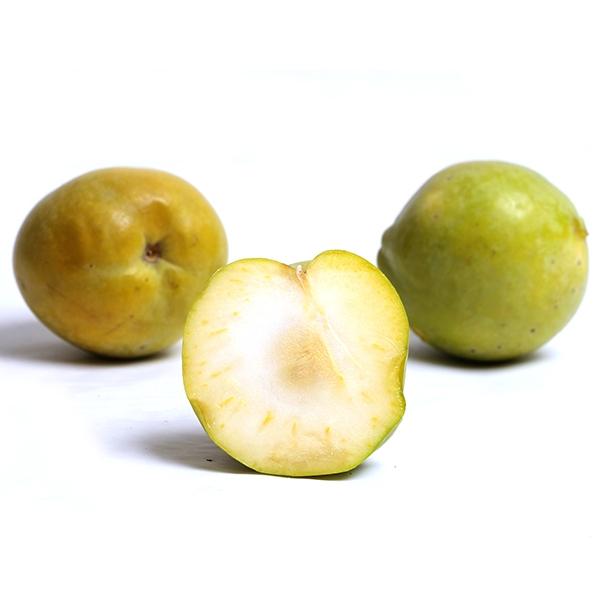
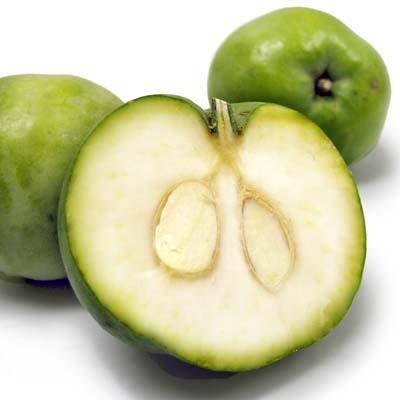
The creamy colored flesh of the White Sapote is very sweet and custard-like with several flat black seeds.
Now grown in Mexico, Florida, and Southern California, the White Sapote is a tropical fruit native to Central America. Closely resembling an apple, in size and shape, this fruit has a thin, edible skin that is easily bruised.
The most popular varieties sold in the United States are distinguishable by their skin colors - ranging anywhere from green to bright yellow. The somewhat sour skin of the green colored Sapote will remain green when the fruit is ripe, while the skin of the yellow-green Sapote is sweeter and becomes more yellow as the fruit ripens.
The creamy colored flesh of the White Sapote is very sweet and custard-like with several flat black seeds. Its distinctive flavor closely resembles a blend of banana, peach, lemon and coconut. Although there is a black Sapote, it is a variety not widely available in the United States.
Look for firm fruit that is green to yellow-green in color. Avoid fruit that is extremely soft or bruised. Sapotes ripen quickly! Hard fruit may be left at room temperature, uncovered until ripe.
Ripe fruit will give to gentle pressure. Once ripe, refrigerate, unwashed in a plastic bag for several days. Freezing may cause fruit to become bitter.