
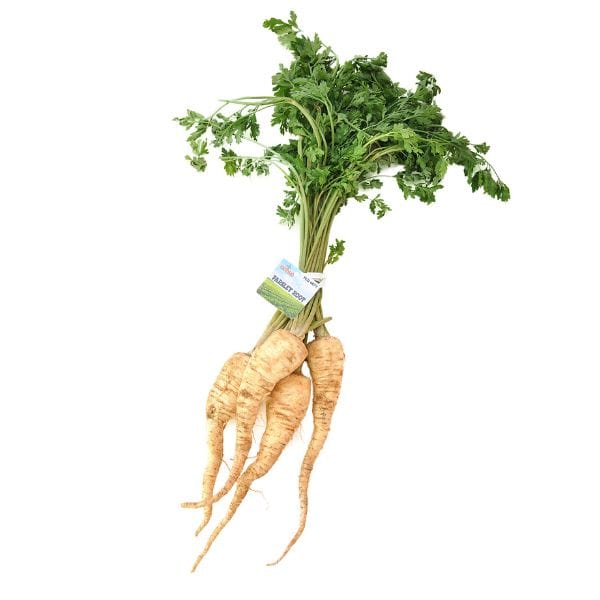
Parsley Root
For Chefs & Produce Managers Food Service: 323-584-4940 Produce Managers: 800-468-7111
Quantity/Pack: 3 bunches (2.25 Pounds)
Seasonality: Mar - May
Origin: USA
Parsley Root combines well with carrots, potatoes, turnips and onions and is often used in soups and stews.
A winter root once popular only in parts of Europe, Parsley Root is now grown in the U.S. mostly for its roots rather than its leaves. This beige colored vegetable, resembling a carrot is often double-rooted and produces a flavor combination similar to both carrot and celery.
Parsley Root combines well with carrots, potatoes, turnips and onions and is often used in soups and stews. Prepared alone, Parsley Root may be creamed, steamed, butter or boiled and its leaves can be used in a manner similar to regular parsley.
When selecting Melissa’s Parsley Root look for firm, creamy roots of equal size. Leaves should be fresh and bright green. Remove leaves just before using roots.
Both roots and leaves should be refrigerated in a plastic bag for up to one week.
To prepare, gently clean Parsley Root with a vegetable brush and remove leaves. Roots may be used whole or sliced.