
Butternut Squash
For Chefs & Produce Managers Food Service: 323-584-4940 Produce Managers: 800-468-7111
Quantity/Pack: 5 lbs.
Seasonality: Year Round
Origin: USA
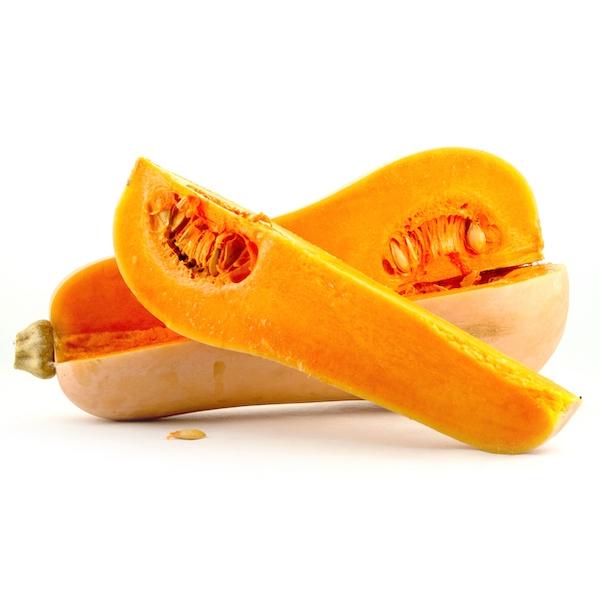
Butternut Squash is bottle-shaped and light orange in color. Its finely textured flesh is bright orange and sweet in flavor. Butternut squash is wonderful pureed and cooked in soups and stews. Replace sweet potatoes with butternut squash in most recipes. Unlike summer squash (which are picked when immature and skins are tender), Butternut Squash have hard, thick skins and only the flesh is eaten. The delicious yellow meat is reminiscent of sweet potatoes and butternut squash and can be baked or steamed.
Choose squash that have a hard, deep-colored rind free of blemishes or moldy spots. Tender skin indicates immaturity or poor quality. The hard skin protects the flesh and allows it to store longer than summer squash. Store Butternut Squash in a cool, preferably dark, well-ventilated area for up to one month. Wrap cut pieces in plastic and refrigerate up to five days.